Agriculture ~ Agricultura
The story of agriculture in Arizona is a tale of the search for cheap and plentiful water and labor. The twentieth century irrigation projects sponsored by the federal government supplied the former; to a great degree, immigrants from Mexico supplied the latter. In 1867, the canals of the Hohokam were re-trenched and the first of many crops were harvested. Mexicans came to the area as workers to help build the canals, level land, clear mesquite, and harvest the first crops. With the completion of the Roosevelt Dam, the planting of cotton, and the advent of World War I, demands for cheap labor increased. Mexican workers were recruited to work in Arizona, beginning the long, difficult, and demanding relationship between Mexicans, Mexican Americans, Euro-Americans and agriculture in Arizona. Women and children migrated as well and many families worked together in the fields. Working for low wages and under poor conditions, families were exploited, as were many laborers.
Mexicans and Mexican Americans, both as documented and as undocumented workers, carved out a living from the planting, cultivating and harvesting of crops including cotton, citrus and vegetables. After World War II, organizations such as the Maricopa County Organizing Project (MCOP) and the United Farm Workers (UFW) fought to uphold the civil and legal rights of agricultural laborers.
Today, some Mexican Americans continue their work as farm laborers, but due to the mechanization and the technology involved in the harvesting of crops their numbers have dropped. Documented and undocumented immigrants, however, continue to work in the fields.
La historia de la agricultura en Arizona es un relato de la búsqueda de mucha agua barata y la búsqueda de labor. Los proyectos de irrigación del siglo veinte, patrocinados por el gobierno federal proveyeron lo primero; y en gran escala, los inmigrantes de México proveyeron lo último. En 1867 los canales del Hohokam fueron re-excavados y el primero de muchos cultivos fue cosechado. Los mexicanos vinieron a esta área como trabajadores a ayudar a construir los canales, nivelar la tierra, limpiar los árboles de mesquite, y cosechar los primeros cultivos. Con la conclusión del dique Roosevelt, la siembra de algodón, y el adviento de la Primera Guerra Mundial, las demandas por labor barata aumentaron. Los trabajadores mexicanos fueron reclutados para trabajar en Arizona, comenzando una larga, difícil, y exigente relación entre mexicanos, México-americanos, euro-americanos y la agricultura en Arizona. Mujeres y niños emigraron y muchas familias trabajaron juntas en los campos. Trabajando por bajos salarios y bajo condiciones pobres, las familias fueron explotadas, así como también los labradores.
Mexicanos y mexicano americanos, ambos trabajadores documentados e indocumentados, se abrieron una vida sembrando, cultivando y cosechando cultivos inclusive algodón, frutas cítricas, y vegetales. Después de la Segunda Guerra Mundial, organizaciones tales como el Proyecto Organizador del Condado de Maricopa (Maricopa County Organizing Project - MCOP) y los Agricultores Unidos (United Farm Workers/UFW) lucharon por defender los derechos civiles y legales de los agricultores.
Hoy día, algunos mexicano americanos continúan su trabajo como agricultures, pero debido a la mecanización y tecnología involucrada en la cosecha de cultivos el número de agricultores ha decaído. Inmigrantes documentados e indocumentados, sin embargo, continúan trabajando en los campos.
Early Agricultural Labor / Comienzos de Labor Agricultural
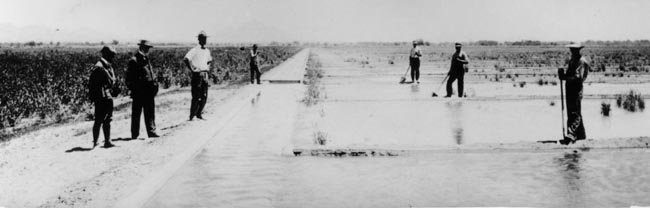
1900
CP MCL 34933
Herb and Dorothy McLaughlin Photograph Collection
Click to view larger image
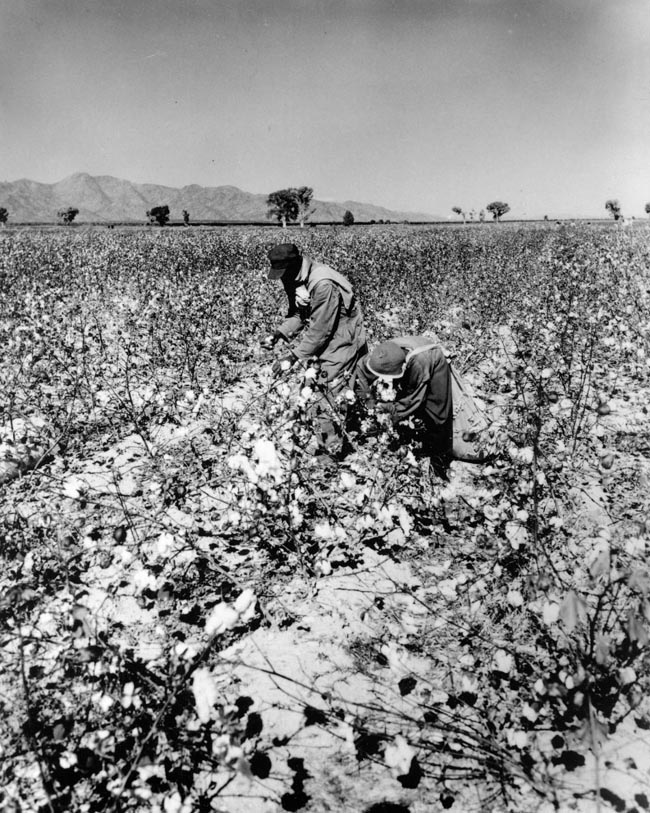
ca. 1946
CP MCL 2861
Herb and Dorothy McLaughlin Photograph Collection
Click to view larger image
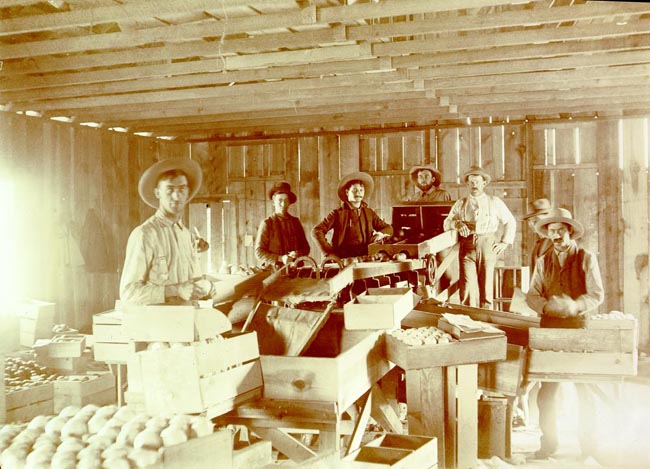
ca. 1900
CP SPC 110:22/A
Greater Phoenix, Arizona, and Southern California Photo Album
Click to view larger image
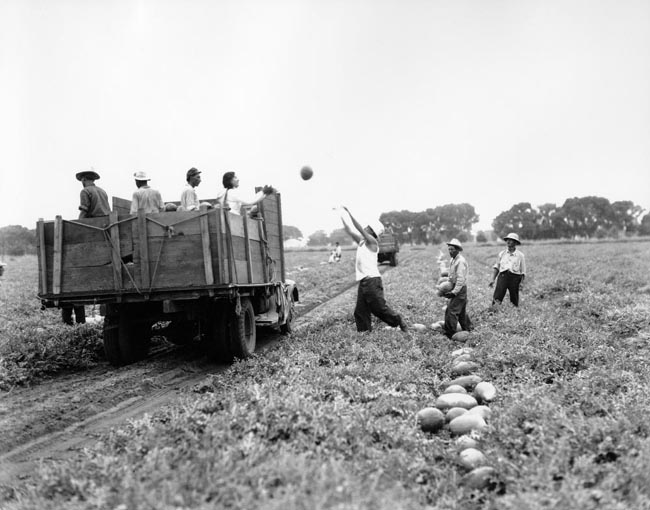
ca. 1930
CP MCLMB A883B
Herb and Dorothy McLaughlin Photograph Collection
Click to view larger image
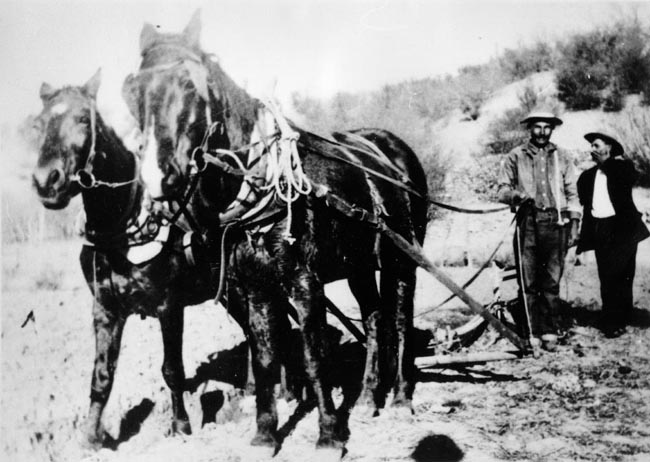
ca. 1918
CP SPC 173:290
Ocampo Collection
Click to view larger image
Organized Labor Movement / Movimiento de Labor Organizada
The Maricopa County Organizing Project (MCOP) was established in 1977 in El Mirage, Arizona. MCOP emerged as an important farm labor advocacy group to protect the civil and human rights of agricultural workers through litigation and the organization of workers in the United States, Central America, and Mexico. Among the issues in which MCOP has played a major role include the regulation and the control of pesticides used in the fields; the development of economic projects in neglected rural areas; the establishment of service centers to manage the health and medical needs of farm workers' families; and the development of public policies in regards to issues such as immigration, labor laws and disputes, sanitation, education, and litigations. MCOP is supported by private foundation grants, church donations, and individuals' gifts.
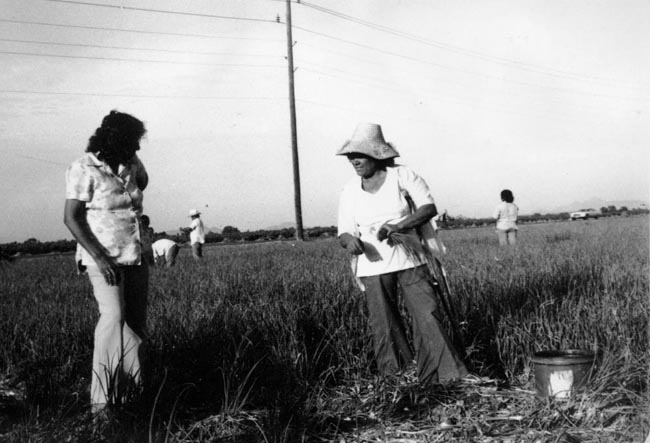
1981
Maricopa County Organizing Project
MCOP Papers
Click to view larger image
El Projecto Organizador de Maricopa County (MCOP) se estableció en 1977 en El Mirage, Arizona. MCOP surgió como un importante grupo defensor de la labor agrícola para proteger los derechos civiles y humanos de los agricultores a través de litigación y la organización de trabajadores de los Estados Unidos, América Central, y México. Dentro de los tópicos en el cual MCOP ha jugado un papel importante están incluídos la regulación y el control de pesticidas usados en los campos, el desarrollo de proyectos económicos en áreas rurales abandonadas, el establecimiento de centros de servicio para administrar la salud y las necesidades médicas de las familias de los agricultores y el desarrollo de normas públicas en lo concerniente a tópicos tales como inmigración, leyes de labor y disputas, sanitación, educación, y litigios. MCOP está patrocinado por donaciones de fundaciones privadas, donaciones de la iglesia, y obsequios individuales.

ca. 1981
Maricopa County Organizing Project
MCOP Papers
Click to view larger image
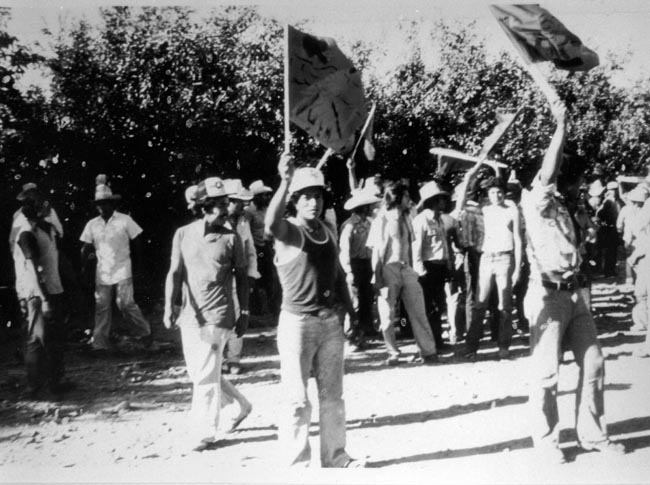
ca. 1981
Maricopa County Organizing Project
MCOP Papers
Click to view larger image
César Estrada Chávez and the United Farm Workers (UFW) / César Estrada Chávez y los Trabajadores Unidos de Hacienda (UFW)
César Estrada Chávez was one of the great pioneers of civil and human rights. He was born in 1927 on a family farm near Yuma, Arizona to a poor Mexican American family that barely earned a living on marginal land. During the Great Depression, the Chávez family lost its land through a tax sale and was forced to join the migrant stream that flowed from harvest to harvest fields of commercial crops. Young César grew up in the shacks of farm labor camps, attended thirty different schools, and eventually reached the seventh grade.
After serving two years in the Navy toward the end of World War II, he met and married his wife Helen Fabela in 1948. By 1958, Chávez began advocating for the development of a farm labor organization. With the help of Dolores Huerta and Gilbert Padilla, Chávez organized the United Farm Workers (UFW), which was initially established in 1962 as the Farm Workers Association (FWA). By 1965, the organization had grown to fifty chapters throughout the San Joaquin Valley, won its first successful strike, and changed its name to the National Farm Workers Association (NFWA).
Chávez merged the NFWA with the Agricultural Workers Organizing Committee (AWOC) to form, with the AFL-CIO, the United Farm Workers Organizing Committee (UFWOC), which initiated a general grape boycott and claimed a victory in 1969 when major table-grape growers signed union contracts. The organization later became the United Farm Workers (UFW).
For his humanitarian contributions and advocacy for farm workers, Arizona State University awarded Chávez an Honorary Doctor of Humane Letters on May 8, 1992. He passed away on April 22, 1993, in Yuma, Arizona, after court testimony defending the UFW. He always acknowledged his Arizona roots and his family's struggles in the fields.
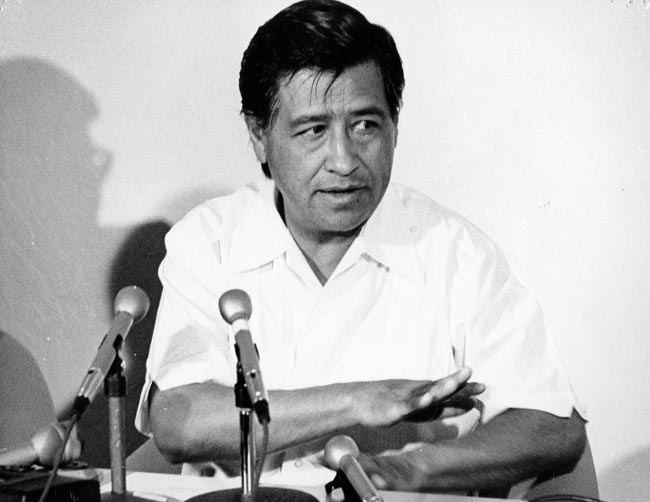
N.D.
ACC# 98-1982
Martha Mitten Collection
Click to view larger image
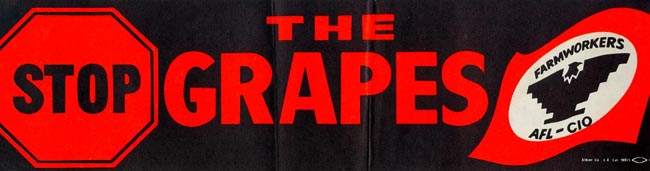
1969
ACC# 98-1982
Martha Mitten Collection
Click to view larger image
César Estrada Chávez fue uno de los grandes pioneros que lucharon por los derechos civiles y humanos. Nació en 1927 en una hacienda familiar cerca de Yuma, Arizona, en una familia México-americana pobre. Durante la Gran Depresión, la familia Chávez perdió su tierra debido a los impuestos y se unió al flujo migratorio que viajaba de cosecha en cosecha. El joven César creció en campamentos de labor, asistió a treinta escuelas y alcanzó el séptimo grado.
Después de servir dos años en la Marina al final de la Segunda Guerra Mundial, conoció y se casó con Helen Fabela en 1948. Para 1958, Chávez comenzó a abogar por el desarrollo de una organización para trabajadores del campo. Con la ayuda de Dolores Huerta y Gilbert Padilla, organizó los Trabajadores Unidos de Hacienda (UFW), inicialmente como la Asociación de Trabajadores de Hacienda (FWA). En 1965, la organización había crecido a cincuenta capítulos, logró su primera huelga exitosa y se convirtió en la Asociación Nacional de Trabajadores de Hacienda (NFWA).
Chávez fusionó la NFWA con el Comité Organizador de Trabajadores Agrícolas (AWOC) para formar, junto con la AFL-CIO, el Comité Organizador de Trabajadores Unidos (UFWOC), que inició un boicot general de uvas y logró una victoria en 1969 cuando criadores de uvas firmaron contratos sindicales. La organización luego se convirtió en los Trabajadores Unidos de Hacienda (UFW).
Por sus contribuciones humanitarias, la Universidad Estatal de Arizona le otorgó un Doctorado Honorario en Letras Humanas en mayo de 1992. Chávez murió el 22 de abril de 1993 en Yuma, Arizona, después de testificar en defensa de la UFW. Siempre reconoció sus raíces en Arizona y las luchas de su familia en los campos.

1970s
ACC# 98-1982
Martha Mitten Collection
Click to view larger image
Read full letter text
An Open Letter to Cesar Chavez from Ernest and Julio Gallo
Dear Mr. Chavez:
We are surprised that you are requesting an election by the Gallo farm workers, who are the highest paid farm workers in the continental United States with the best package of fringe benefits.
You know that Gallo has a legally binding contract with the Teamsters Union; the union chosen by the Gallo farm workers to represent them.
You know that Gallo cannot unilaterally break that contract any more than Gallo can break its contracts with the three AFL-CIO unions representing other Gallo workers.
You know that, if Gallo yielded to your request, Gallo would violate its contract with the Teamsters and become subject to Teamster strikes, lawsuits and other harassment, including boycotts.
You know that Gallo is now and always has been perfectly agreeable to an election if you and the Teamsters would agree to such an election, and if the results were legally binding and enforceable on all parties.
You know that the answer to this problem is in legislation, state or federal, to give farm workers and their employers the same rights, benefits and protection given most other American laborers and their employers under the National Labor Relations Act.
You know that, so far, the only reason we do not have a California labor law like the National Labor Relations Act is because you oppose such a law.
You know that California farm workers need and deserve such legislation, under which most other American labor has grown strong and prosperous.
Isn’t it time, Mr. Chavez, that you change your position, and join the rest of organized labor and Gallo in seeking legislation to bring farm labor under the protection of the National Labor Relations Act, or an equivalent state law?
[Signed] Ernest Gallo and Julio Gallo
Click to view larger image
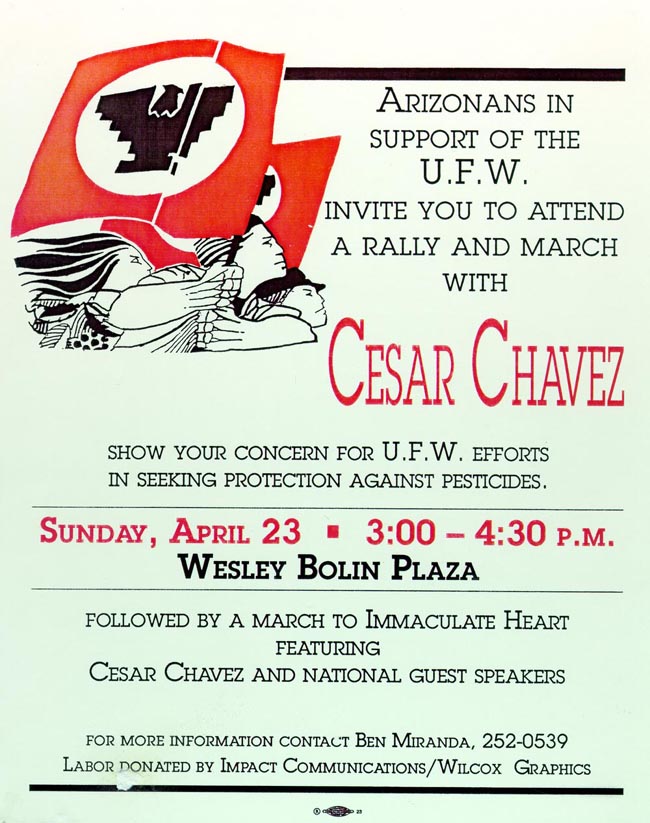
Read full rally poster text
Arizonans in support of the U.F.W. invite you to attend a rally and march with Cesar Chavez.
Show your concern for U.F.W. efforts in seeking protection against pesticides.
Sunday, April 23 • 3:00 – 4:30 p.m.
Wesley Bolin Plaza
Followed by a march to Immaculate Heart
Featuring Cesar Chavez and national guest speakers
For more information contact Ben Miranda, 252-0539
Labor donated by Impact Communications / Wilcox Graphics
National Coalition on the Hanigan Case / Coalición Nacional en el Caso Hanigan
The National Coalition on the Hanigan Case, a human rights advocacy group, was formed in 1977 in order to protect the civil rights of three Mexican nationals who were tortured, beaten, and robbed by George Hanigan and his sons, Patrick and Thomas, a prominent and wealthy ranching family, in Douglas, Arizona. The three Mexican Nationals crossed the Hanigan Ranch in pursuit of agricultural work in Elfrida, approximately twenty-five miles from Douglas, and were accused of burglary, a crime which they did not commit.
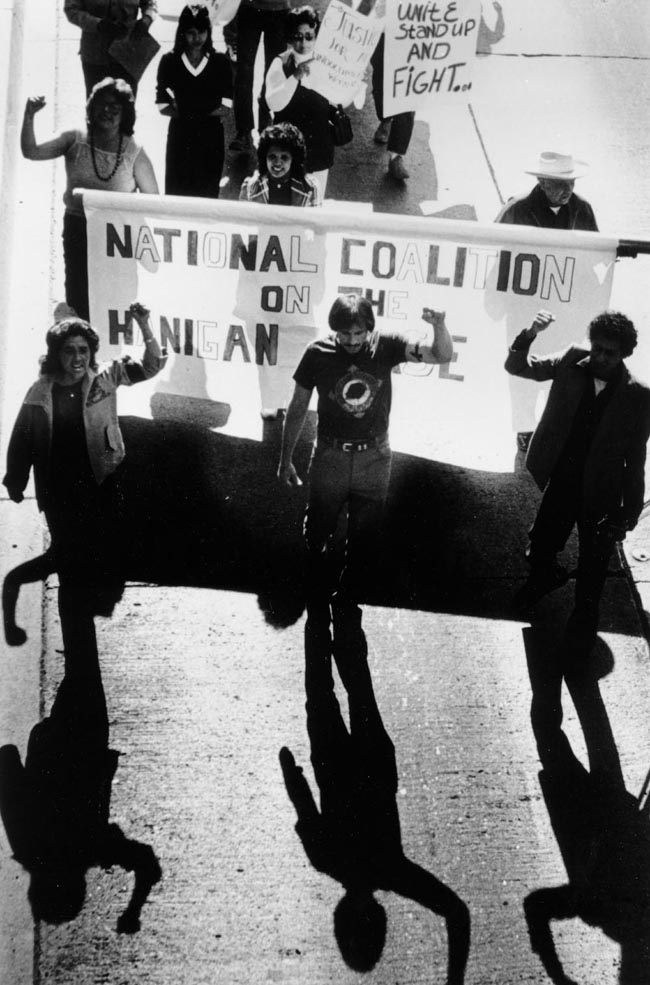
N.D.
MP MA-14
Mexican American Collection
Click to view larger image
La Coalición Nacional en el Caso Hanigan, un grupo para defender los derechos humanos, fue formada en 1977 con el objeto de proteger los derechos de tres mexicanos nacionales, quienes fueron torturados, golpeados, y víctimas de robo por George Hanigan y sus hijos, Patrick y Thomas, una familia ranchera muy prominente y acaudalada, en Douglas, Arizona. Los tres mexicanos nacionales cruzaron el Rancho Hanigan en busca de trabajo agrícola en Elfrida, aproximadamente a veinticinco millas de Douglas, y fueron acusados de allanamiento de morada, un crimen que ellos no cometieron.

Copyright Arizona State University Libraries
Box 871006, Tempe, AZ 85287-1006