Edward Shortliffe
Faculty facts
First name
EdwardLast name
ShortliffeAcademic title and academic unit
Adjunct Professor
College of Health Solutions
Award details
Highly prestigious awards
National Academy of Medicine
Member
1987
Faculty spotlight
Spotlight title
National Academy of MedicineThumbnail image
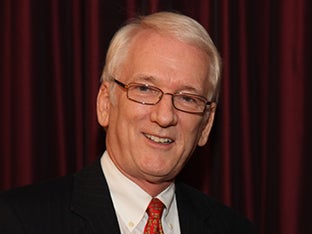
Bio summary
Edward Shortliffe’s studies have centered on the fields of biomedical computing and artificial intelligence He been invested in promoting medical and bioinformatics training, and mentoring students and junior faculty.
Bio image

Bio
Dr. Edward H. Shortliffe is adjunct professor of biomedical informatics, focused on teaching and mentoring of students and junior faculty with the College of Health Solutions at Arizona State University. He is also Chair Emeritus and adjunct professor of Biomedical Informatics at Columbia University's College of Physicians and Surgeons. Prior to his present appointment, Dr. Shortliffe lectured in the ASU Department of Biomedical Informatics and was a senior advisor to the dean of the College of Health Solutions from 2009 to 2018. In addition, he served as the founding dean of the Phoenix campus of the University of Arizona’s College of Medicine in partnership with ASU (2007-2008). His interests include medical education, biomedical informatics education and training, clinical decision-support systems, and role of the internet in health and health care and federal health IT policy.
Dr. Shortliffe was elected a member of the National Academy of Medicine in 1987 and received the Walsh McDermott Medal for Distinguished Service to the National Academy of Medicine and to the National Academies of Sciences, Engineering, and Medicine in 2023. He is also an elected fellow of the American College of Medical Informatics and the Association for the Advancement of Artificial Intelligence. He received the François Grémy Award of Excellence from the International Medical Informatics Association in 2021 and the Morris F. Collen Award of the American College of Medical Informatics in 2006. Dr. Shortliffe has authored more than 350 articles and books in the fields of biomedical computing and artificial intelligence (source: https://www.shortliffe.net/).