Scientific: Nannorrhops ritchieana
Common: Mazari palm
Family: Arecaceae
Origin: Middle East and Southwest Asia from the southeast Arabian Peninsula east through Iran, Afghanistan, Pakistan and northwestern India in dry areas at elevations to 5,300 feet.
Pronounciation: Nan-nor-RHOPS rit-chi-ee-A-na
Hardiness zones
Sunset 4-24
USDA 7-11
Landscape Use: Smallish, accent palm for multiple uses across xeric to mesic landscape design types, great for use in desert and transition landscapes, difficult landscape sites, or even around pools or water features, raised planter beds, excellent container palm.
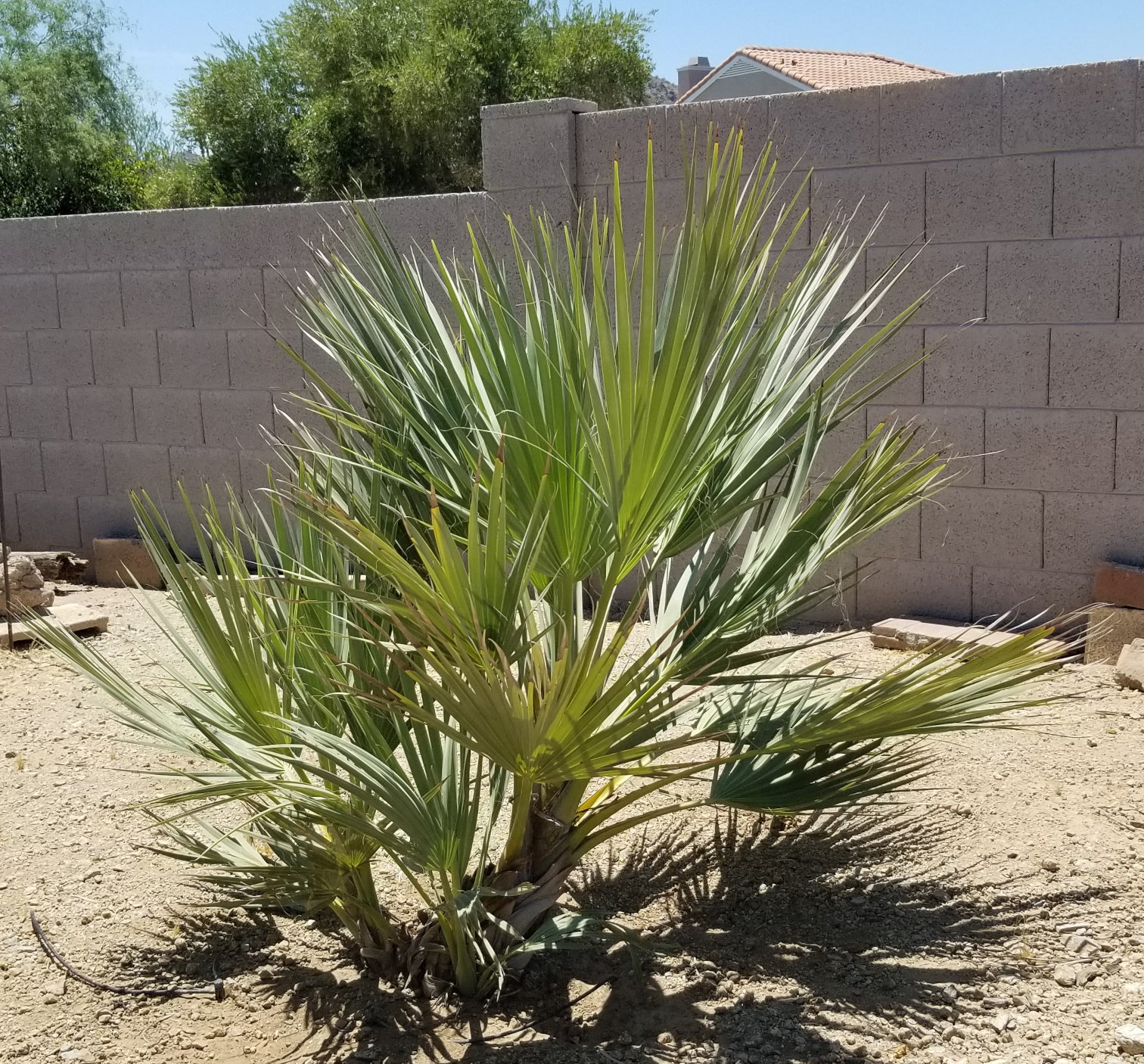
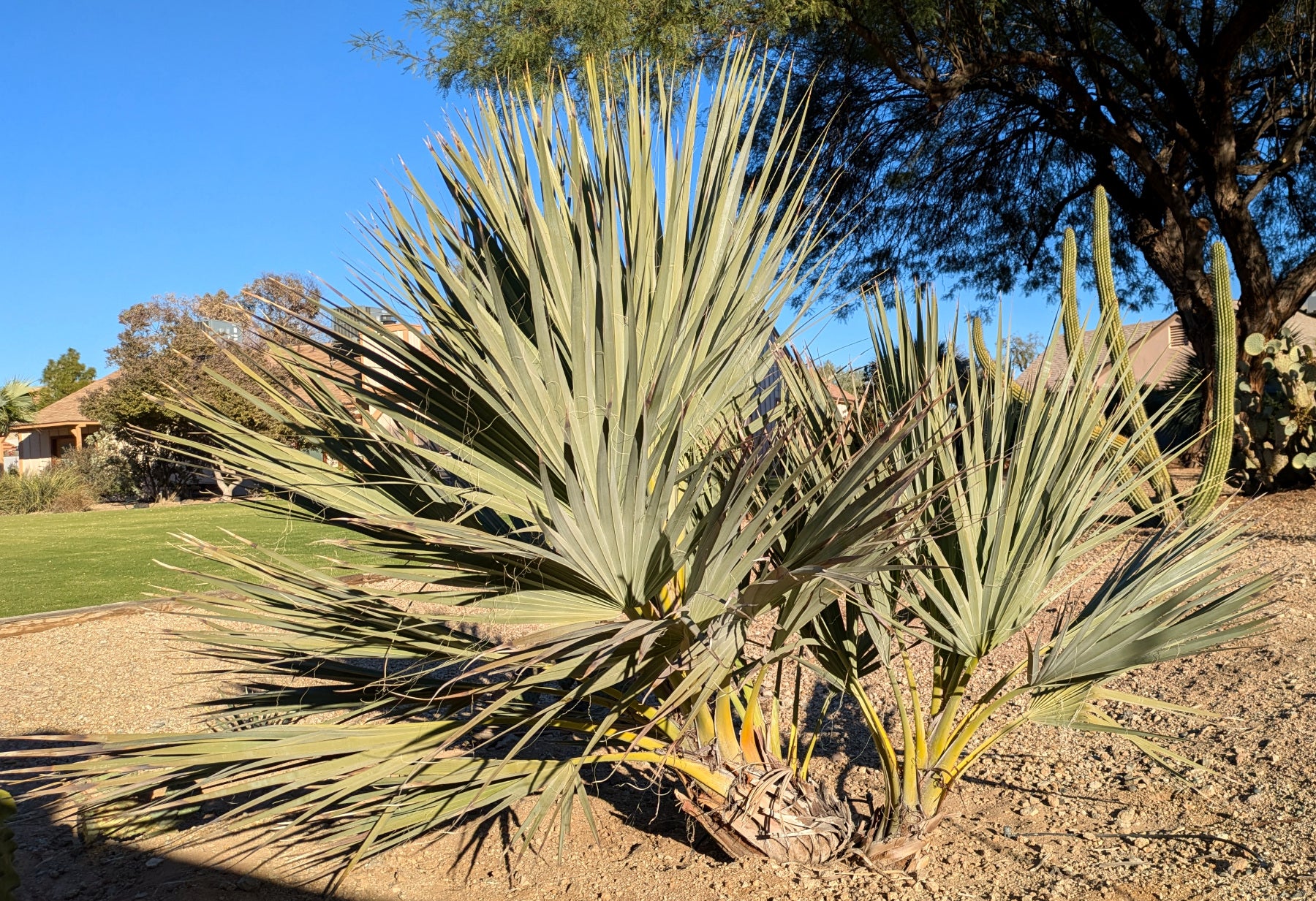
Form & Character: Upright and strongly clumping, stiff, controlled, somewhat recessive, glaucous and arid, environmentally tough.
Growth Habit: Evergreen, perennial monocot, extensive basal branching that ultimately forms multiple-trunked large specimens, moderate growth rate to 20-feet tall, though mostly smaller in Phoenix. Each stem or branch is monocarpic, which means that it flowers only once, then dies back and produces an offshoot.
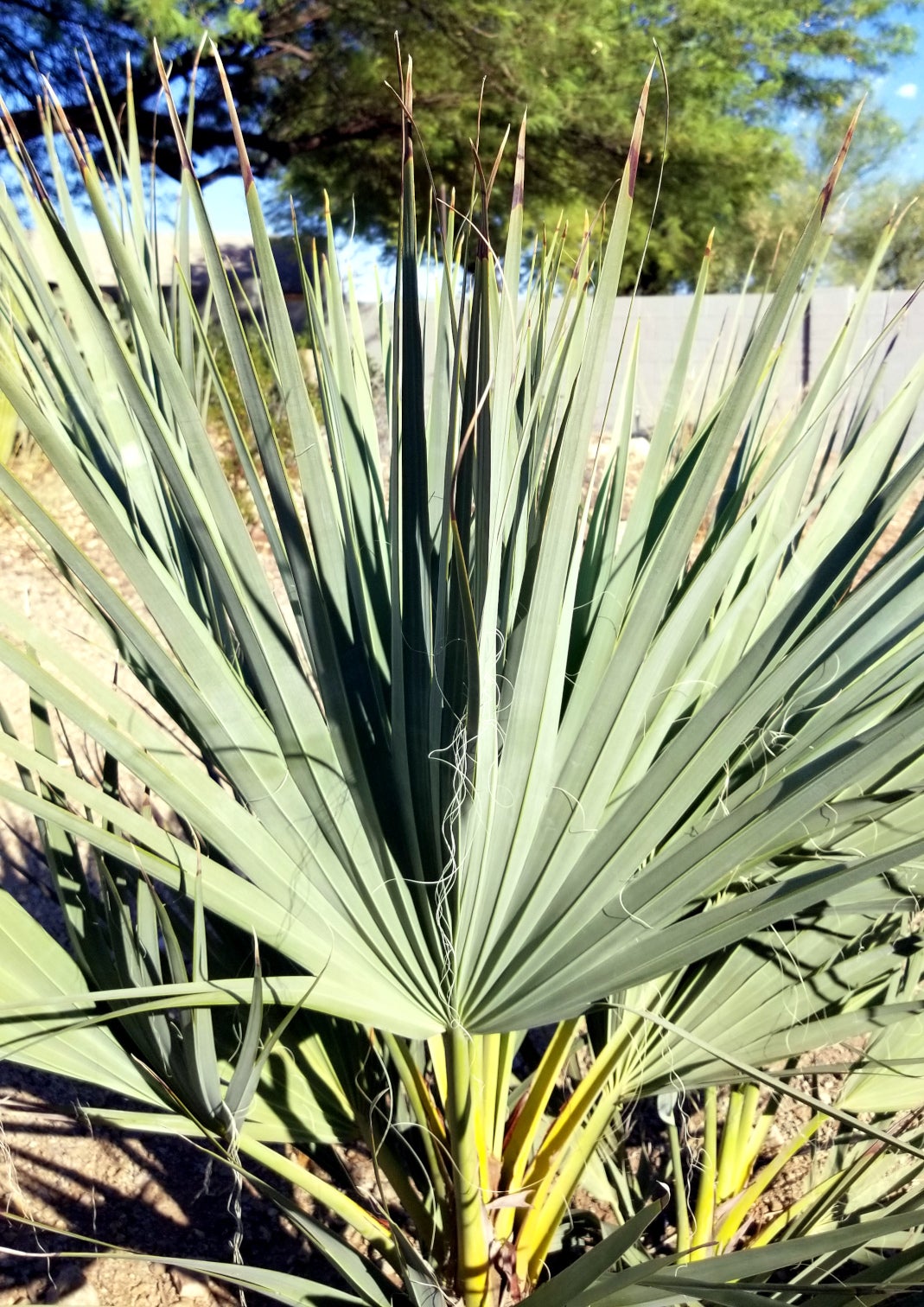
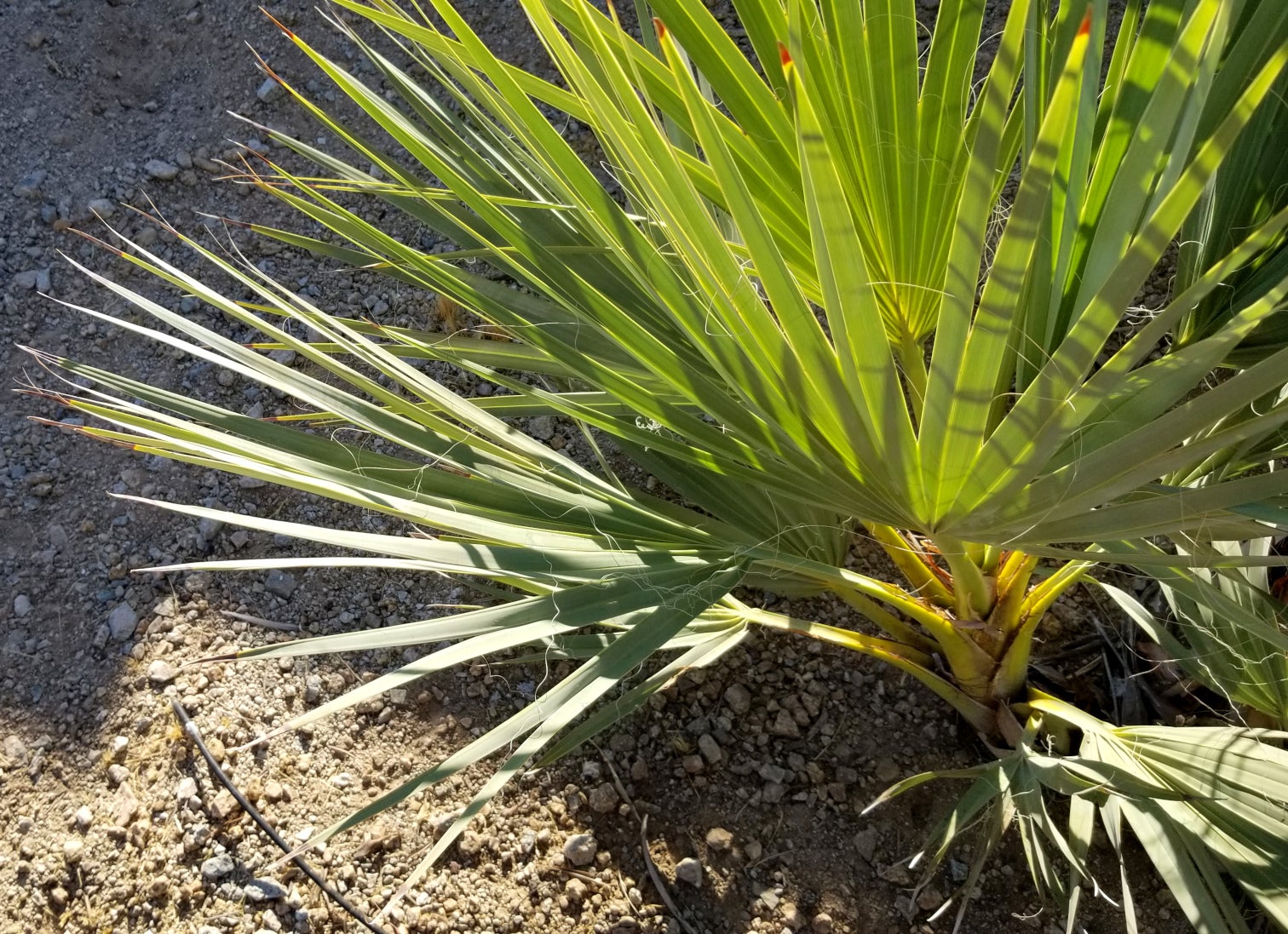
Foliage/Texture: Glaucous-gray green to silver filamentaceous fronds with smooth petioles that extend to a sheath clasping around the trunk, fronds costapalmate with 20 to 30 pinnae, each pinnae is from 12- to 48-inches long. Fronds are generally stiff and maintain an open fan shape, but 'floppy-leaf'' forms with markedly reflexed pinnae exist; medium to coarse texture.
Flowers & Fruits: Dioecious with male and female flowers on separate plants, dense clusters of white flowers are held out and above the foliage in 4- to 6-feet long branching clusters; fruits are an edible drupe, 1/2-inch in diameter, and brown to orange in color when mature with a single seed.
Seasonal Color: None
Temperature: Mazari palm is remarkably cold and heat tolerant tolerant (even heat loving) for a palm, hardy to 5oF.
Light: Full sun, no shade.
Soil: Tolerant, but soils MUST be well drained.
Watering: Needs only little supplemental water during summer.
Pruning: Little needed, only to remove dead fronds.
Propagation: By seed, which geminate slowly and sporadically over a long period of time. Also, division of basal offshoots.
Disease and Pests: Lethal yellowing and ganoderma fungus.
Additional comments: Mazari palm is one environmentally tough monocot that is unfortunately rarely seen in Phoenix landscapes. It is especially tolerant of poor, dry, infertile soils and desert heat. It does however have one glaring weakness ---> chronically cold, wet and poorly-drained soils!
Taxonomic tidbits: The specific epithet ritchieana honors British surgeon, explorer and naturalist, Joseph Ritchie (1788–1819). Mazari palm is only species in the genus Nannorrhops.